

Your travel and tourism news reporter
Provided by AGP
Russia Outbound Shock: DataGreat Models Where European Tourism Lands Next
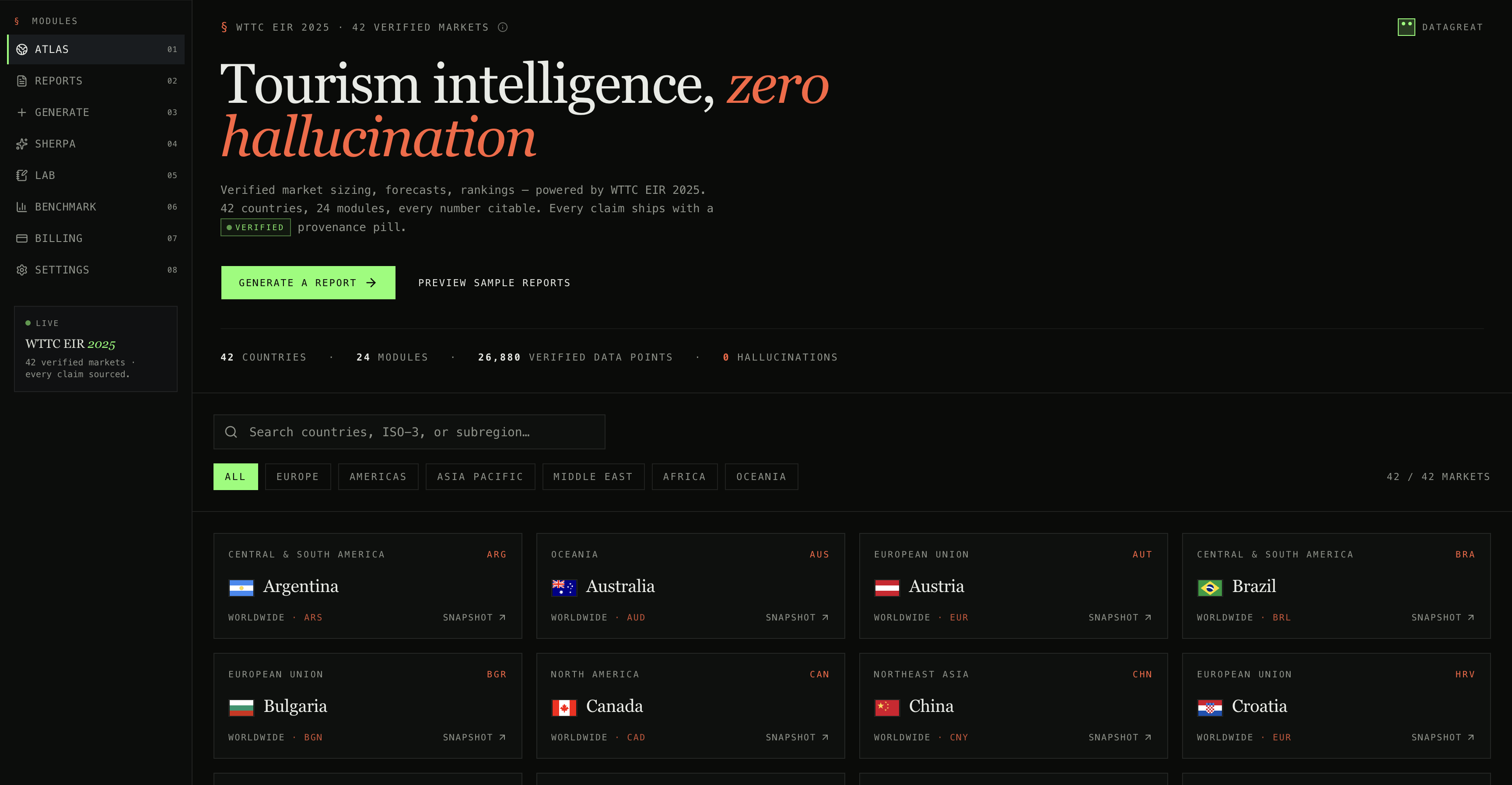
The DataGreat platform interface, showing the Country Snapshot workflow, one of eight named research presets covering 42 tourism economies.

Alper Tekin - Safaryar Holidays Founder
DataGreat's Crisis Impact Simulator stress-tests a renewed drop in Russian outbound tourism, mapping exposure by destination, segment, and operator type.
The first Russian outbound shock was an event. What we are modeling now is whether destinations have built enough source-market diversification to handle a second one — and most of them have not.”
— Alper Tekin, Founder of DataGreat
EDIRNE, TURKEY, May 14, 2026 /EINPresswire.com/ -- Tourism intelligence platform DataGreat today released a scenario analysis examining how a renewed shock to Russian outbound tourism would reshape inbound patterns across Europe and the eastern Mediterranean. The analysis was produced on DataGreat's Crisis Impact Simulator, layered over the WTTC Economic Impact Report 2025 dataset.
The first Russian outbound shock — triggered by the February 2022 invasion of Ukraine and the subsequent sanctions, airspace closures, and payment-corridor disruptions — has already redirected the bulk of Russian leisure outbound away from EU destinations. Türkiye, the United Arab Emirates, and Egypt absorbed the displaced volume. EU destinations that previously held meaningful Russian inbound shares saw declines of seventy percent or more across the post-2022 period.
The new analysis models what happens if the residual exposure is removed in a second wave — driven, in the simulator's framing, by tighter sanctions, payment-rail constraints, ruble depreciation, or a further closure of indirect travel routes.
The Crisis Impact Simulator runs the scenario as an outbound shock with magnitudes ranging from a twenty percent to a thirty-five percent decline in Russian outbound to a given destination over twelve months. Outputs separate three categories of exposure: residual EU destinations still carrying Russian inbound concentration; Mediterranean destinations exposed through package-holiday and charter dependency; and absorber markets — Türkiye foremost among them — where the question is not whether Russian inbound retreats but whether substitute source markets are positioned to fill the gap.
The simulator's segment-vulnerability layer flags the operators most directly exposed: charter-dependent package operators, all-inclusive coastal resorts in shoulder season, and destination management companies whose contract mix tilts toward Russian-language tour groups. Vulnerability is computed deterministically from inbound share data; the AI layer only writes the narrative explaining the figures.
Mitigation levers identified by the simulator across destinations include source-market diversification toward Gulf-cooperation-council countries and India; product repositioning toward European source markets through the conversion of all-inclusive inventory; and currency-corridor hedging at the operator level for businesses with significant ruble-denominated cash flow.
The analysis complements DataGreat's Risk Radar module, which scores all forty-two destinations weekly across six tourism risk categories including source-market concentration. Together, the two modules let analysts move from "this destination is exposed" to "this is what a specific shock looks like, segment by segment."
DataGreat will publish destination-specific breakdowns from the simulator on a rolling basis through 2026. Credentialed media may request the full simulator output for any of the 42 destinations covered in the WTTC Economic Impact Report 2025 dataset.
About DataGreat
DataGreat is a tourism intelligence platform built on the WTTC Economic Impact Report 2025 dataset, covering 42 countries and 26,880 verified data points. Its product suite includes a Persona Builder, Risk Radar, Campaign Brief Generator, and Crisis Impact Simulator. The platform is operated by Solustiq Yazılım ve Yapay Zeka Teknolojileri A.Ş., headquartered in Edirne, Türkiye.
Alper Tekin
Data Great
hello@datagreat.com
Legal Disclaimer:
EIN Presswire provides this news content "as is" without warranty of any kind. We do not accept any responsibility or liability for the accuracy, content, images, videos, licenses, completeness, legality, or reliability of the information contained in this article. If you have any complaints or copyright issues related to this article, kindly contact the author above.
